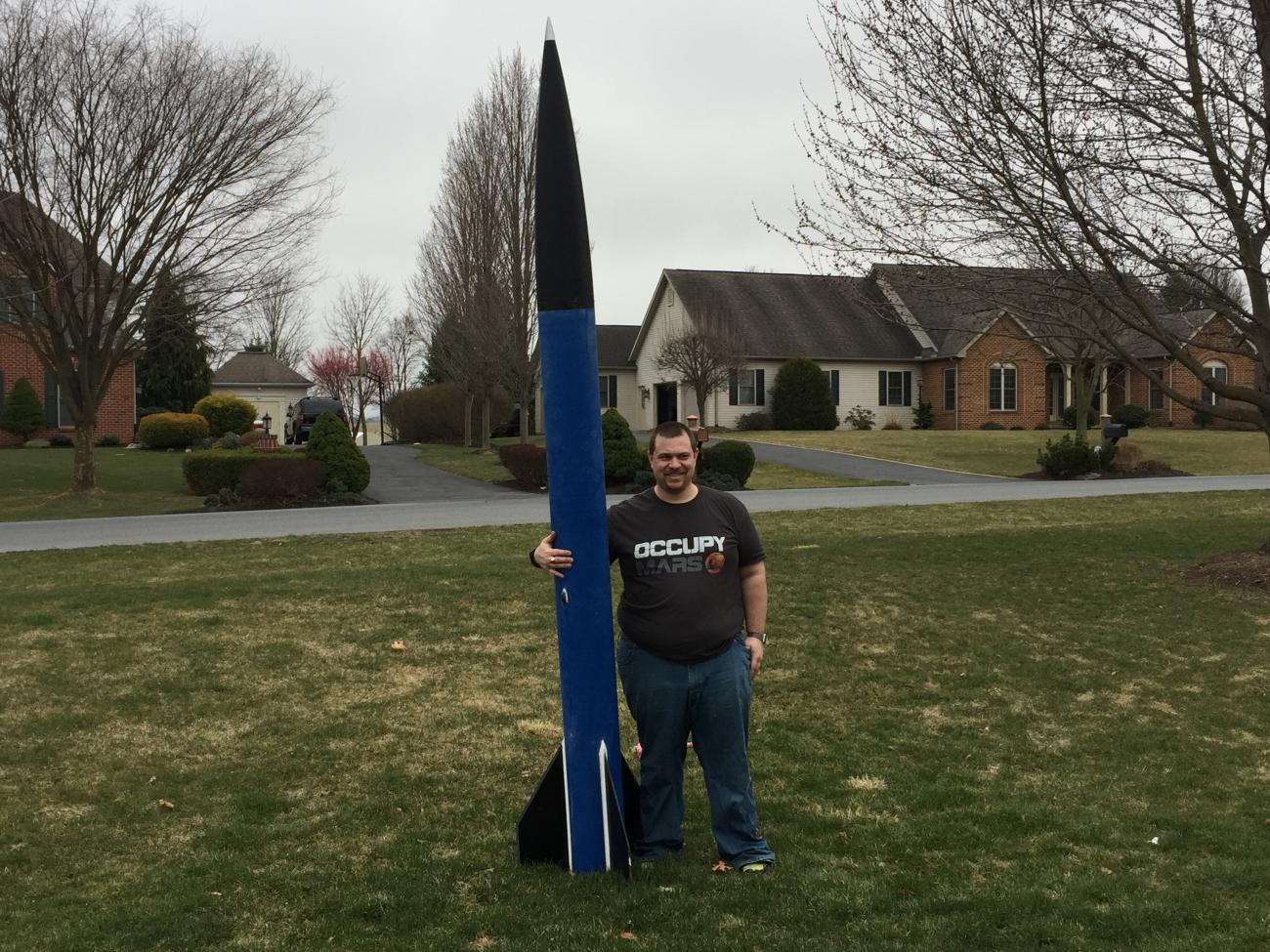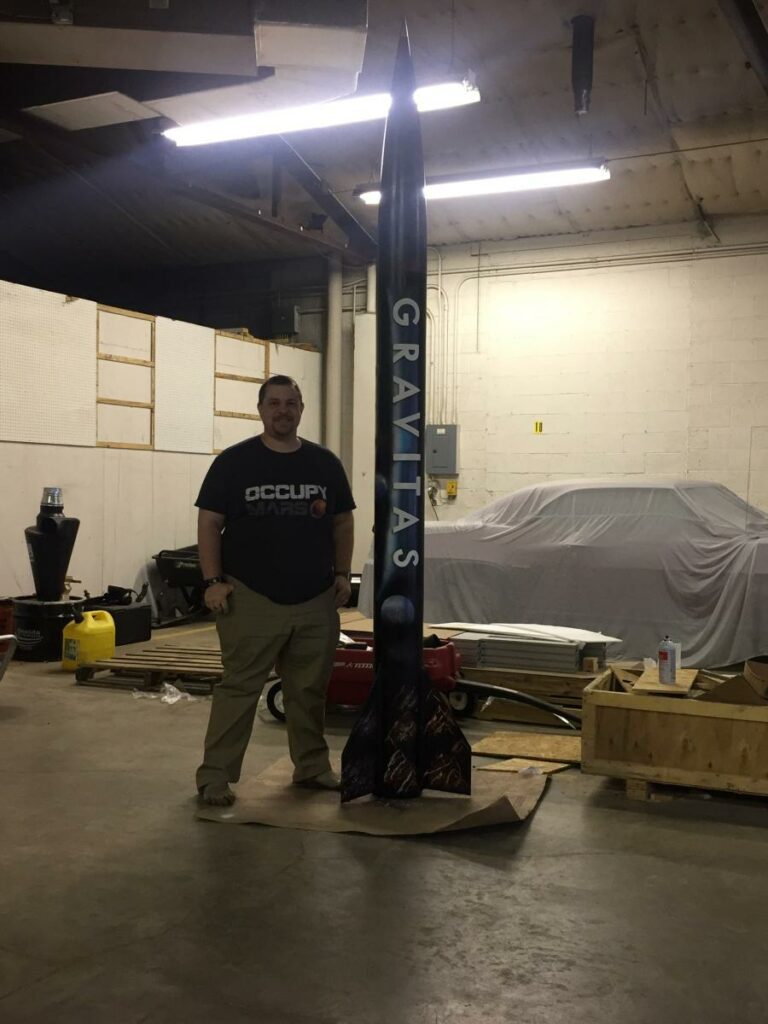
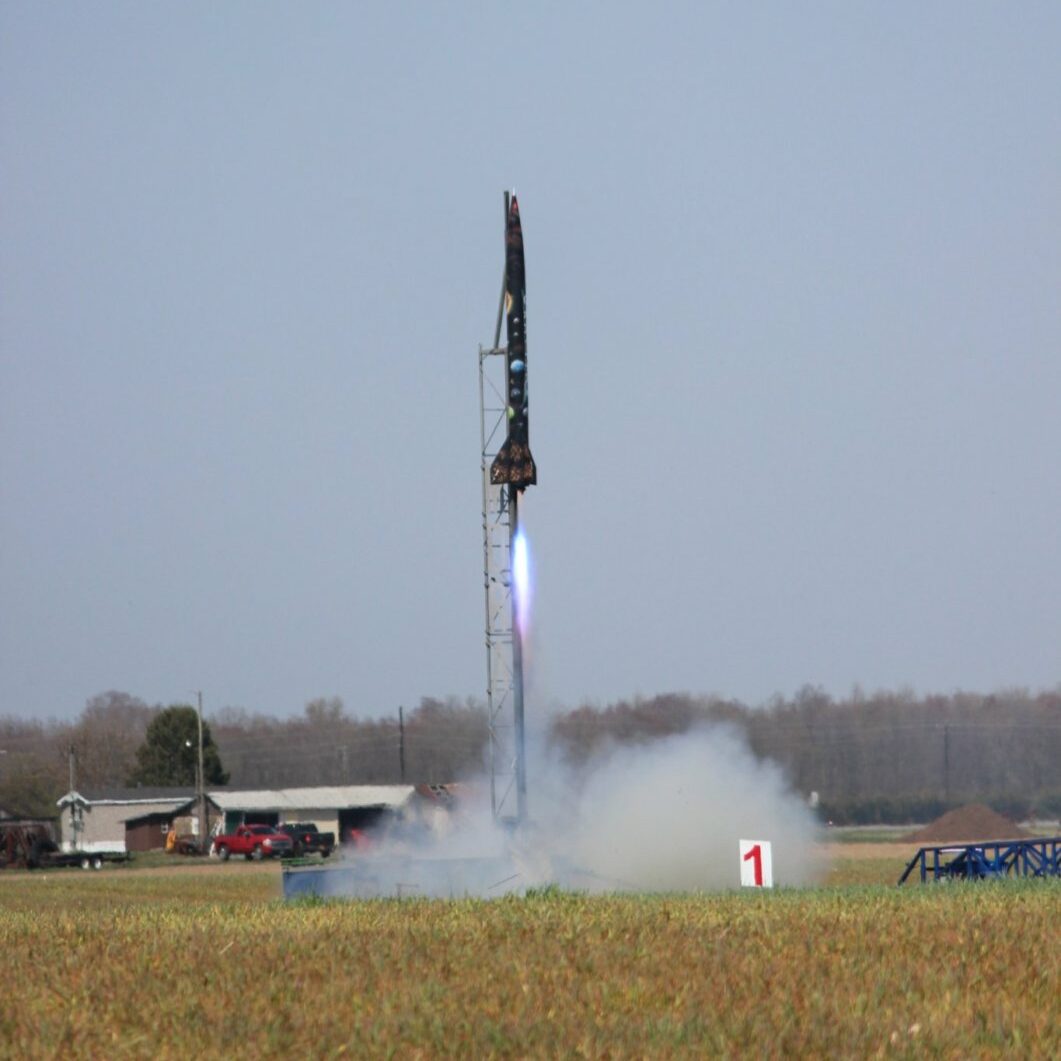
In the fall of 2017, I completed the Level 2 cert. It was time to move on to Level 3. At the July launch, I picked up a Formula 200 kit from the good folks at AMW. Gloria sealed the deal by throwing in an Aeropack 98 mm retainer for free. It would make a capable airframe for the Level 3 attempt.
Given the waivers at the Sod Farm and Higgs, I wanted something relatively heavy and big. The Formula 200 comes in about 50–55 lb unloaded, which lets it handle a wide range of M and N motors and stay within the waiver.
Our 3–5 year goal is to send a 1 kg payload to over 100,000 ft and recover it. This project was the next step.
Goals
- Obtain the L3 cert. L3 is required for a flight that high, and it re-acquaints the team with this level of complexity.
- Create a robust airframe that can be used as a test bed for larger 75 mm and 98 mm experimental motors. The 100,000 ft flight plan calls for experimental motors; this airframe is an eventual flight test bed for the larger ones.
- Gain experience with the ARRD recovery configuration in a larger rocket where recovery forces are likely to be large. The same method flew on the Level 2 cert and is the recovery method we want on the sustainer for 100 k.
- Machine a custom-designed aluminum thrust ring. Custom bulkheads will show up on the 100 k project; a thrust plate is a straightforward start on that machining.
- Develop the tools, ground support, and processes necessary to support a large, complex launch:
- a better transport rack
- better work cradles for assembly and prep
- a proper case for the LCD receivers for the TRS altimeter
- a two-person prep process with checklists and double confirmation
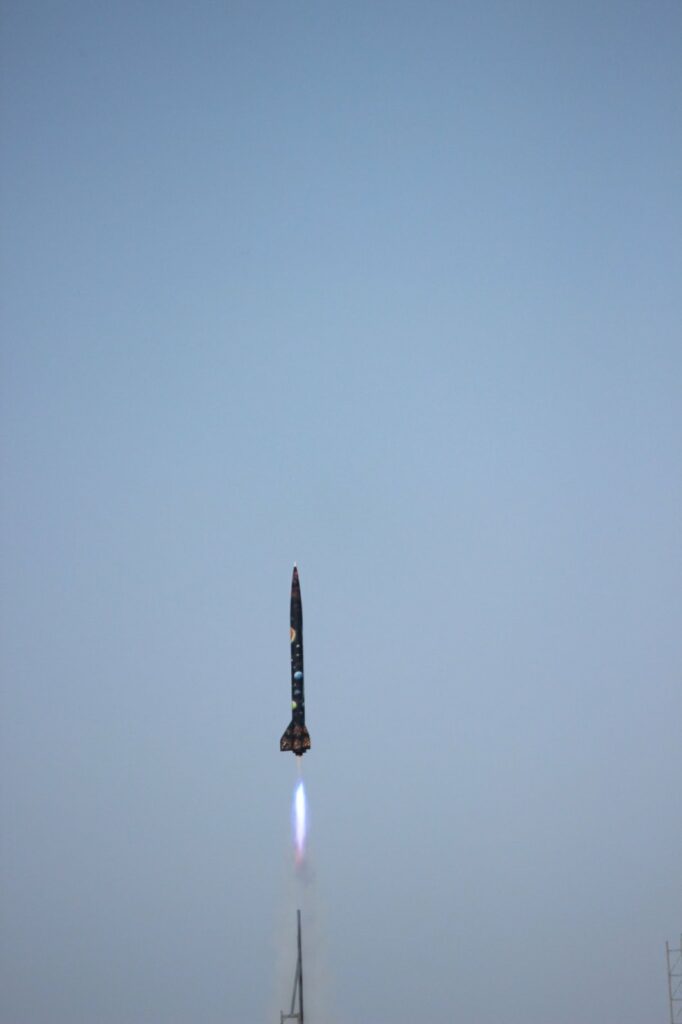
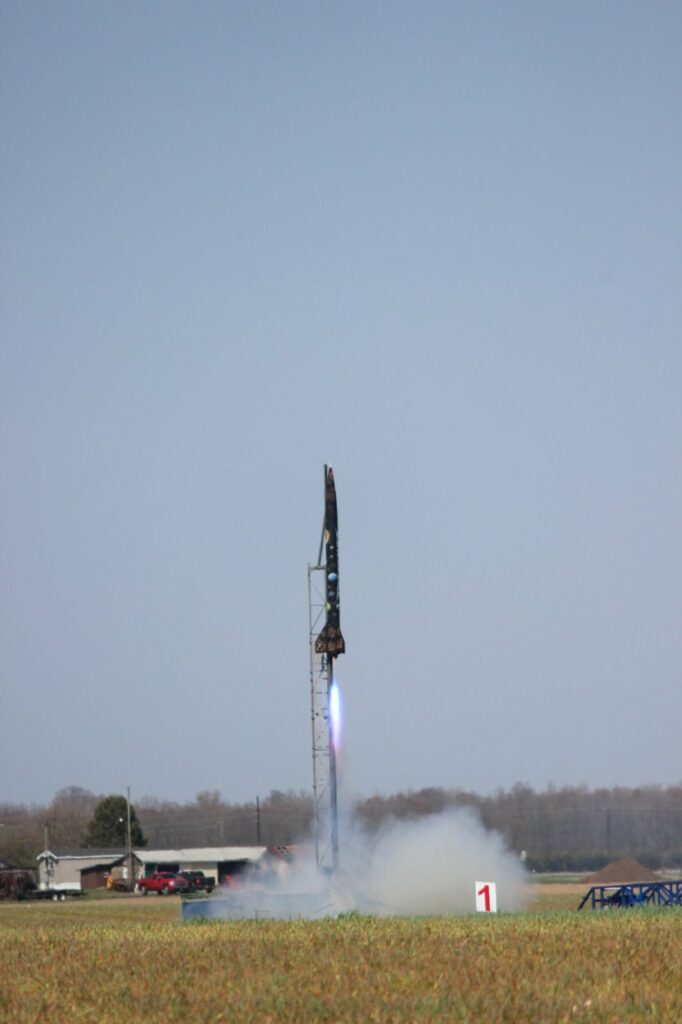
This project launched at LDRS in April 2017.
Flight log
| Specification | Value |
|---|---|
| Diameter | 8 in |
| Length | 104 in |